
The Relationship Development Process
Success in business starts with successful relationships. That’s why the relationship development process has long served as a practical guide for how marketing and business development work together. Each stage plays a distinct role: marketing lays the foundation, and business development brings that foundation to life through human connection.
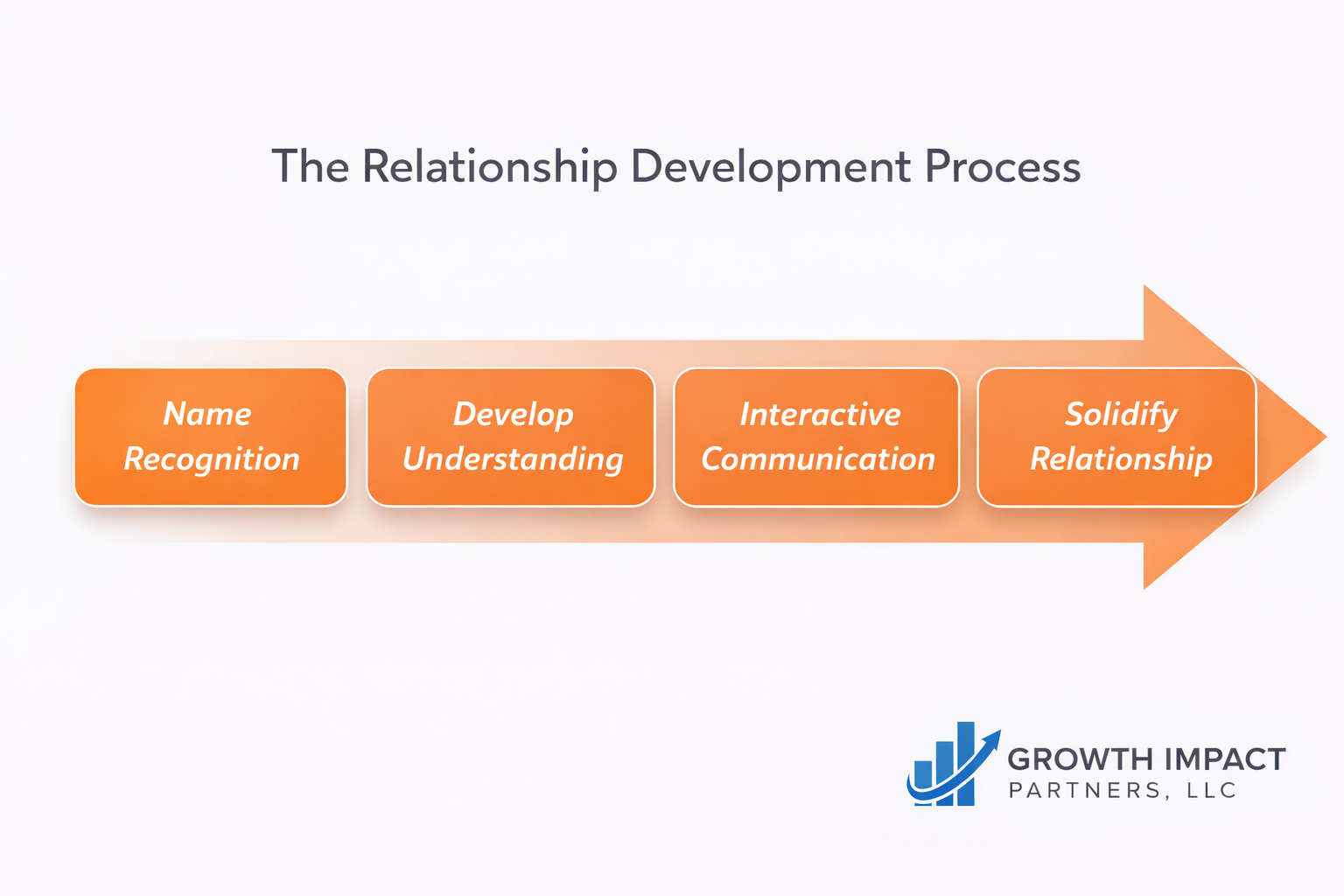
The Relationship Development Process:
1. Name Recognition
In this first stage, a company or individual moves from being unknown to being known. It’s the essential groundwork—people can’t build a relationship with you if they don’t know you exist.
Marketing typically drives this phase through advertising, promotions, mailers, press, and digital visibility. Business development reinforces it every time a new introduction is made. Even a simple “I’m John Adams with ABC Company” builds name recognition.
One important truth: if your company is unknown before you initiate a relationship, your chances of converting that relationship into a sale drop dramatically. Visibility matters.
2. Develop Understanding
Once people know your name, they need to understand who you are and how you fit into their world. This stage clarifies:
What your company does
How you create value
How others perceive you in the industry
Marketing carries most of the weight here through websites, brochures, newsletters, and articles. Business development reinforces it in conversation—helping others understand not just the company, but the individual representing it.
This is where people begin to see how you might be helpful to them.
3. Interactive Communication
At this point, the relationship must shift from information to interaction. This is where human connection begins.
Facts matter less. Personal rapport matters more.
Business development leads this stage with minimal marketing involvement. The goal is simple: build trust through genuine, two‑way communication.
4. Solidify the Relationship
A relationship becomes solid when you engage in mutually beneficial action. When you call someone at this stage, the conversation flows easily. You can move between direct business topics and indirect personal ones without friction.
Business development and project management typically work together here. This is often the moment when new work begins—because trust has been earned.
How Are You Doing?
When you look across these stages, the importance of both marketing and business development becomes clear. Each plays a different but essential role in the sales process.
Take a moment to assess:
Is your marketing team truly building name recognition and understanding, or just producing glossy materials?
Is your business development team consistently initiating meaningful, interactive communication or is that responsibility unclear?
Are you intentionally moving relationships through each stage, or hoping they progress on their own?
Strengthening even one stage can dramatically improve your sales effectiveness. Strengthening all four can transform your business.
-------------
Tim Klabunde, FSMPS, CPSM
Strategic Growth Advisor
Tim is a seasoned advisor who helps architecture, engineering, and construction firms achieve sustainable, strategic growth. As the former owner of an ENR Top 500 firm recognized six consecutive years on the Inc. 5000 list of fastest‑growing companies in the United States, he brings deep expertise in Strategic Growth Planning, Seller‑doer Coaching, Brand Positioning, and Leadership Development.
